Peptides for Structure Muscle: Whatever You Required to Know for Ideal Gains
Peptides have actually emerged as substantial players in the domain name of muscle building. Their ability to promote development hormone release and boost healthy protein synthesis makes them appealing to professional athletes and fitness lovers. Numerous kinds of peptides provide unique advantages, yet they likewise come with dangers that necessitate careful consideration. Recognizing just how these substances feature and the most effective means to integrate them into a fitness routine is important for those seeking perfect gains. What lies ahead in this exploration?
Understanding Peptides: What They Are and Exactly how They Function
The term "peptides" might commonly be associated with innovative physical fitness and bodybuilding conversations, they are essentially short chains of amino acids that play necessary roles in numerous biological processes. Peptides typically include 2 to 50 amino acids linked by peptide bonds, working as building blocks for proteins. These molecules operate as signifying agents, influencing a vast array of physical features, including hormonal agent regulation, immune actions, and mobile communication.
The body naturally generates peptides, but they can additionally be manufactured in laboratories for healing objectives. Various peptides have unique functions, such as modulating metabolic rate and advertising tissue repair. Their reasonably tiny size enables less complicated absorption and quicker activity within the body contrasted to larger healthy proteins. This unique particular makes peptides useful in various areas, including medication and nutrition, where they are explored for their prospective advantages past muscle mass development, such as improving healing and overall health and wellness.
The Duty of Peptides in Muscle Mass Development
Peptides play a considerable duty in muscular tissue growth with various devices of activity. Different sorts of peptides, such as growth hormone-releasing peptides and insulin-like growth factor peptides, add to muscle mass advancement by improving protein synthesis and healing. Comprehending these systems and peptide kinds is vital for optimizing muscle-building approaches.
Mechanism of Activity
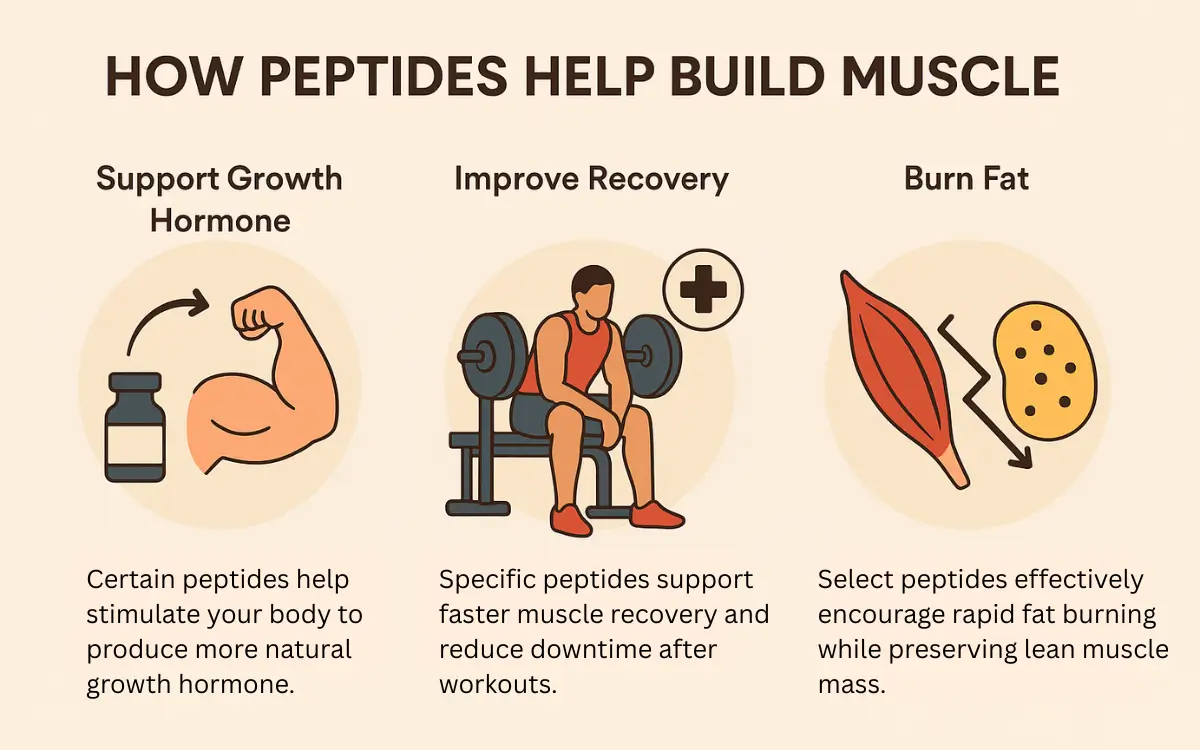
Understanding the system of action behind peptides reveals their significant function in muscle mass growth. Peptides work as indicating particles, influencing different organic procedures that boost muscle mass growth. They promote the launch of development hormones, which advertises healthy protein synthesis and muscle hypertrophy. Furthermore, peptides can enhance nutrient absorption and rise blood circulation to the muscles, promoting much better healing and development post-exercise. By turning on specific receptors, peptides also modulate mobile pathways associated with muscular tissue repair service and regrowth. This diverse technique not just increases muscle gains but also improves overall athletic performance. The combination of peptides right into a training routine can serve as a powerful tool for people aiming to optimize their muscle-building capacity.
Types of Peptides
Various kinds of peptides play a substantial function in muscular tissue development, each with one-of-a-kind homes and mechanisms. Growth hormone-releasing peptides (GHRPs) promote the secretion of development hormonal agent, advertising muscular tissue repair work and hypertrophy. Insulin-like development factor-1 (IGF-1) peptides boost mobile development and proliferation, directly influencing muscle development. In enhancement, peptide hormonal agents like Myo-Enhancer and Follistatin hinder myostatin, a healthy protein that restricts muscular tissue growth, thus permitting better gains. Collagen peptides sustain connective tissue wellness, boosting recovery and overall performance. Selective androgen receptor modulators (SARMs) mimic testosterone's effects, promoting anabolic procedures while decreasing side impacts. Each sort of peptide adds distinctive benefits, making them important tools for those looking for perfect muscle-building outcomes.
Popular Peptides for Enhancing Muscular Tissue Mass
Many athletes and health and fitness fanatics are turning to specific peptides to enhance muscle mass and maximize their training outcomes. Amongst one of the most popular peptides are Growth Hormone-Releasing Hormones (GHRHs), such as GHRP-6 and Ipamorelin, which stimulate the release of development hormone, promoting muscle growth and fat loss. Another commonly used peptide is Mechano Development Factor (MGF), known for its duty in muscular tissue repair and hypertrophy after intense exercises. Furthermore, the peptide called BPC-157 has actually obtained attention for its healing residential properties, aiding in recuperation from injuries while sustaining muscle development. Other remarkable peptides include Piece 176-191, which targets fat loss while preserving muscle mass. These peptides, usually utilized in conjunction with extensive training and nourishment, are looked for after for their prospective to boost muscle gains and performance, making them a part of several athletes' regimens.
Benefits of Making Use Of Peptides for Recuperation and Performance
Peptides not just contribute to muscular tissue growth however also play a significant duty in recovery and general efficiency improvement. These bioactive compounds can speed up the recovery process after extreme workouts by promoting cell fixing and regeneration. By promoting the launch of development hormone, peptides help in reducing muscular tissue discomfort, permitting athletes to educate much more regularly and with greater strength.
Furthermore, peptides can improve endurance by boosting the body's oxygen-carrying capability, which is important for continual athletic performance. They likewise support better nutrient absorption, making sure that muscular tissues receive the needed amino acids and nutrients for recuperation.
Particular peptides have anti-inflammatory homes, which can relieve post-exercise inflammation and promote quicker recovery times. Overall, the incorporation of peptides right into a physical fitness routine can result in enhanced recuperation prices, enhanced efficiency, and a much more effective training cycle, making them an important possession for athletes and physical fitness lovers alike
Prospective Threats and Negative Effects of Peptide Use
While peptides offer many advantages for muscular tissue growth and recuperation, their use is not without potential risks and side effects that require consideration. Individuals might experience adverse responses such as injection site irritability, consisting of discomfort, inflammation, or swelling. Furthermore, some peptides can result in hormone discrepancies, possibly causing mood swings, fatigue, or adjustments in sex drive. Long-term use raises problems regarding the possibility for body organ pressure, especially on the liver and kidneys, because of the enhanced metabolic demands. The uncontrolled nature of peptide production can lead to contamination or mislabeling, posing extra moved here health and wellness threats. Finally, mental dependence may develop, with users really feeling forced to continue usage despite unfavorable effects. It is important for people considering peptide supplementation to weigh these threats against the desired advantages and seek advice from a healthcare professional prior to continuing.
Just How to Incorporate Peptides Into Your Health And Fitness Routine
Integrating peptides into a health and fitness program needs careful factor to consider of timing and dose. Properly timing doses can boost their efficiency, while piling them with ideal supplements might amplify results. Recognizing these strategies is important for individuals aiming to enhance their muscle-building efforts.

Timing Your Doses
To maximize the advantages of peptides in a physical fitness regimen, timing their dosages is crucial. Carrying out peptides at certain intervals can boost their efficiency, particularly in connection with exercises. Several professional athletes discover that taking peptides soon before or after training sessions takes full advantage of muscle recovery and growth. This timing allows the body to make use of the peptides when metabolic task is increased, resulting in boosted muscular tissue healthy protein synthesis.
Additionally, some peptides may call for consistent daily dosing to keep suitable degrees in the bloodstream. It is essential to develop a regimen that straightens with private their website training timetables and goals. By carefully planning the timing of peptide doses, people can ensure they acquire the optimal capacity from their supplementation, thereby boosting their total physical fitness end results.
Stacking With Supplements
Integrating peptides right into a physical fitness routine can be even more enhanced by strategically stacking them with other supplements. For excellent muscle-building results, individuals frequently incorporate peptides like development hormone secretagogues with branched-chain amino acids (BCAAs) and creatine. BCAAs sustain muscle recuperation and reduce pain, while creatine boosts toughness and power during workouts. In addition, including protein powders can assist meet everyday protein demands, enhancing the results of peptides. It is essential to monitor individual actions and change does as necessary. Consulting with a medical care professional prior to starting any type of new supplement program assurances security and efficiency. This collaborating strategy to supplements not just takes full advantage of muscular tissue gains but also supports overall physical fitness goals, providing an all-around technique for those seeking boosted performance.
Often Asked Questions
Are Peptides Legal for Athletes in Competitive Sports?
Peptides are typically forbidden for professional athletes in competitive sports, as they fall under the category of performance-enhancing substances according to most sports organizations. Professional athletes must be mindful and mindful of laws prior to considering their use.
Can Peptides Replace Traditional Muscle-Building Supplements?
Peptides can not fully change typical muscle-building supplements, as they offer different purposes. While peptides may boost recovery and growth, conventional supplements commonly supply necessary nutrients needed for general muscle mass development and efficiency enhancement.
How much time Does It Take to See Arise From Peptides?
Arise from peptides commonly appear within four to eight weeks, relying on private factors such as exercise, dosage, and diet regimen regimen. buy Peptides for Building Muscle. Constant usage integrated with a correct training program can enhance results considerably
Exist Age Constraints for Making Use Of Muscle-Building Peptides?
Age constraints for using muscle-building peptides generally depend upon regional policies and guidelines. Generally, these materials are recommended for grownups, with care advised for more youthful individuals due to developing problems and potential health risks associated with their use.
How Should Peptides Be Stored for Optimum Performance?
Peptides need to be kept in a trendy, completely dry area, ideally in a fridge to preserve security. Avoid exposure to direct sunlight and wetness, guaranteeing that they remain in their initial packaging until usage for optimum performance.
Peptides typically consist of 2 to 50 amino acids connected by peptide bonds, serving as building blocks for healthy proteins. Different types of peptides, such as development hormone-releasing peptides and insulin-like growth click for more factor peptides, add to muscle advancement by boosting healthy protein synthesis and recuperation. Development hormone-releasing peptides (GHRPs) boost the secretion of growth hormone, advertising muscle mass repair work and hypertrophy. Insulin-like development factor-1 (IGF-1) peptides boost cellular growth and spreading, directly influencing muscular tissue advancement. Amongst the most prominent peptides are Growth Hormone-Releasing Hormones (GHRHs), such as GHRP-6 and Ipamorelin, which stimulate the release of development hormonal agent, promoting muscle development and fat loss.